
_5949de.png)
Valve is shutting down the massive collection of custom skins on the Skinchanger website for CS2
According to reports, Valve has, for the first time, ordered a major website that modifies esports game mechanics to cease operations by shutting it down. This move has raised questions within the community about what comes next and sets a new precedent for how esports games handle local cheats. Here’s everything you need to know.
Valve Shuts Down Skinchanger, a CS2 Skin-Trading Website
The Counter-Strike world has a large external economy. Skin trading, sports betting, and other industries are often intertwined with esports and the gaming experience. However, cheats are also something players are willing to pay for: hacked clients and “skin changers” that allow players to alter the appearance of weapons and items locally can be extremely lucrative.
While blatant hacks degrade the overall gaming experience by making games unfair, clients for customizing characters have traditionally existed in a moral gray area. Developers have varying attitudes toward mods that only alter the local appearance. League of Legends and Marvel Rivals have frequently faced hackers who modified their character skins, and both games have addressed this issue in recent years. Now, it seems Valve is following suit.
Valve Issues a Cease-and-Desist Order
On September 11, 2026, the Valve account @gabefollower stated that it “had received confirmation and seen court documents indicating that Valve […] issued a pre-trial cease-and-desist letter demanding that one of the largest skin-trading platforms cease its operations.”
According to @gabefollower, the legal proceedings took place in Russia. This is particularly significant because Valve is an American company, and Russia has been facing significant sanctions worldwide for several years, which makes legal relations between the two countries especially complicated. It is also one of the largest markets for Counter-Strike, and the region is a mainstay of CS2 esports. Think, for example, of donk and Team Spirit.
@gabefollower shared an image of the reported court documents, redacted to protect anonymity. The documents were provided by Valve’s Russian legal partners, Melling, Voitishkin & Partners.
The document
Translated from Russian, the document reads as follows:
“The law firm Melling, Voitishkin & Partners has the honor of representing the interests of Valve Corporation, one of the leading players in the global computer gaming industry. Valve Corporation is known as the creator of such popular game franchises as Half-Life, Counter-Strike, Portal, and Dota 2, as well as the developer of Steam—one of the world’s most popular digital platforms for distributing computer games.”
Your website [censored] infringes upon Valve Corporation’s exclusive intellectual property rights. These infringements are intentional and ongoing in nature.
You are required to immediately cease the aforementioned infringements. Otherwise, Valve Corporation reserves the right to take appropriate action against you, including seeking substantial monetary damages in court, as well as file a complaint with law enforcement authorities requesting an investigation to determine whether your actions constitute criminal offenses.
Response from Touch Skins
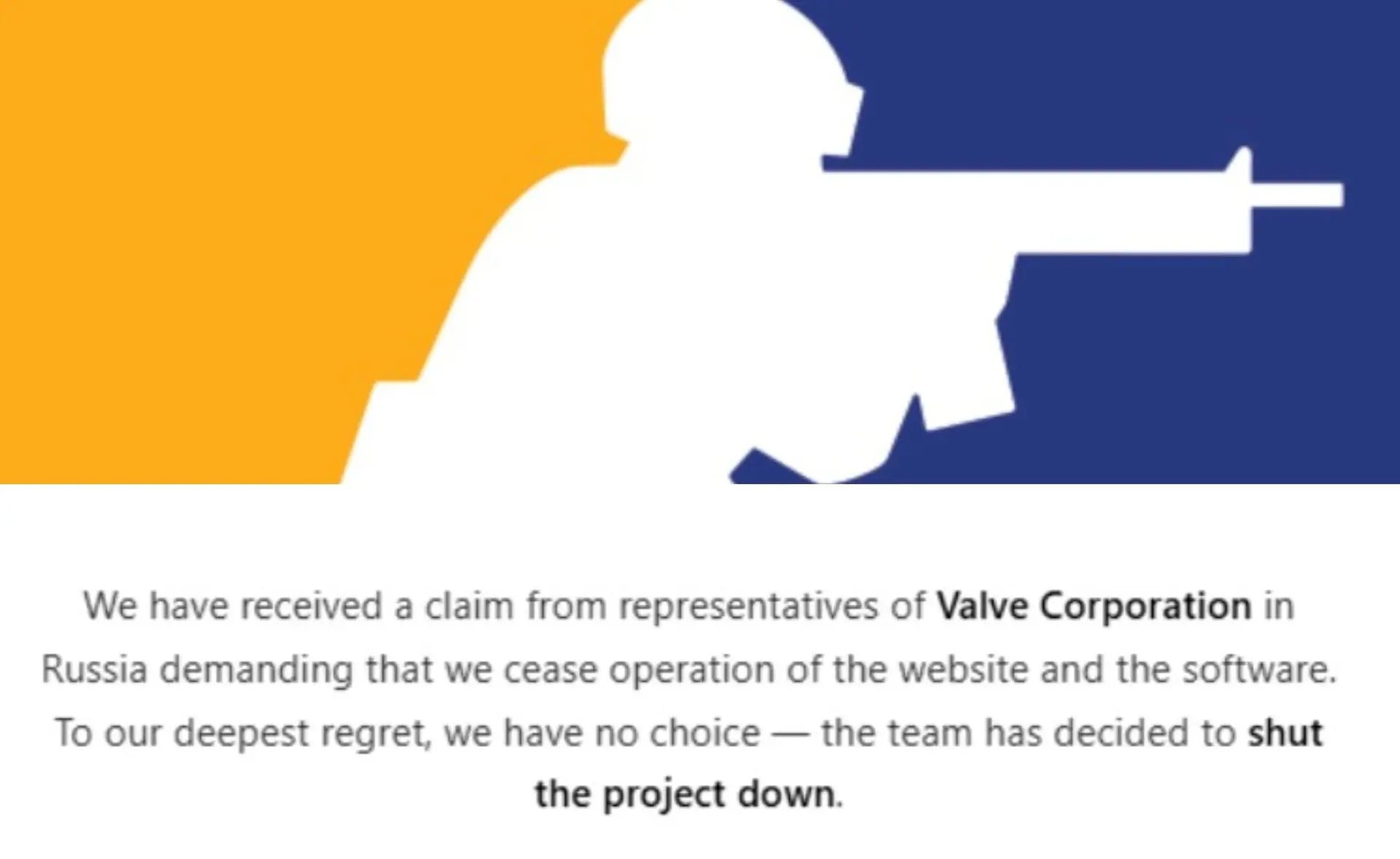
The skin website shut down after receiving legal documents, stating: “We have received a claim from representatives of Valve Corporation in Russia demanding that we cease operation of the website and software. To our deepest regret, we have no choice—the team has decided to shut down the project.”
According to other sources, this censored skin website—Touch Skins—has since ceased operations. Along with its website, Touch Skins has deleted its social media accounts and source code.
Are there more shutdowns ahead?
Valve is known for not intervening in CS2’s rules. Although the game takes noticeable steps to block highly toxic players, it is lax on moderation compared to other games. The number of hacking incidents in competitive queues is also high enough to create a market for third-party ranking platforms such as FACEIT and Premier.
If these lawsuits against Valve are legitimate, this will be the first case of this scale against a cheat provider. Players are wondering whether this is just a one-off incident or the beginning of a larger effort to completely block cheaters.
Some online users point out that skins are unique among Counter-Strike cheats because they have the greatest impact on revenue. When players can modify their weapons locally, they lose the incentive to buy cases and keys. In addition, players can buy and sell skins on the Steam Marketplace, which is also operated by Valve.
Earlier in August, we saw Call of Duty similarly ramp up its anti-cheat efforts by taking legal action. The game’s development team sent lawyers to personally confront cheat vendors in Ohio, a move that went viral online. Perhaps Valve took note of COD’s success and the community’s positive reaction to that decision.
Regardless of whether Valve’s recent move marks the beginning of a stricter anti-cheat policy or is simply a way to stimulate the skin economy, it sets an interesting precedent for local cheat management in CS2 and future versions. Stay tuned for Counter-Strike news.
Відповіді