
A Shot to the Leg: How the Russians Rally the Hockey Elite Around Them
They certainly didn’t expect this. It seemed as though the Russians had taken everything into account and employed all the scenarios they had tested in other sports and based on the example of the International Olympic Committee. First, they pushed through the appointment of a figure favorable to them as president of the International Ice Hockey Federation (IIHF). Frenchman Luc Tardif, who had held this position since 2021 and was known for his exceptional support for Ukraine, decided to step down. Mr. Tardif’s deputy, the Czech Petr Briza, seemed like the ideal replacement. However, the Russians, using every resource at their disposal, pushed the former head of the German Ice Hockey Federation, Franz Reindl, into this position—a man who has never hidden his sympathy for Russia and whose candidacy Russia had lobbied for during the IIHF presidential election back in 2021. But Tardif won that election.
Reindl became president of the international federation on October 2, and by the end of the month, the Court of Arbitration for Sport (CAS) ruled to reinstate the Russian national teams’ participation in the world championships. It seemed that all that remained was a formality: the approval of the verdict by the now-puppet IIHF. The particular cynicism of the situation lay in the fact that the Russians were to take Ukraine’s spot at the 2027 World Championship—as the lowest-ranked team among the 16 participants who had earned that right based on the results of the 2026 World Championship. Russian propagandists immediately spread this information, citing unnamed sources within the IIHF.
However, unlike in fencing, judo, freestyle and Greco-Roman wrestling, artistic and rhythmic gymnastics, boxing, and other sports, the civilized hockey community did not accept such arbitrariness. The point is that the elite division of world hockey consists mainly of developed countries in Western Europe and North America. With the help of votes from Africans and Asians, it is possible to elect the head of the International Federation. But you can’t force civilized people to play hockey with those monsters.
Latvia’s position is the clearest. This country has enshrined a ban on competing against the Russians in law—with all the consequences that entails. However, like other former Soviet countries, Latvia is not regarded as human by these monsters. That is why the reaction of other countries was extremely important.
Speaking on behalf of Finland, former IIHF Vice President Kalervo Kummola was the first to comment; he initially stated that, according to his information, there was no question of demoting Ukraine due to Russia’s return. He added: “I believe that Latvia and Finland will join the majority of major hockey nations that do not understand the CAS’s foolish decision. This is a completely different matter than a boycott, which would ruin the entire competition.”
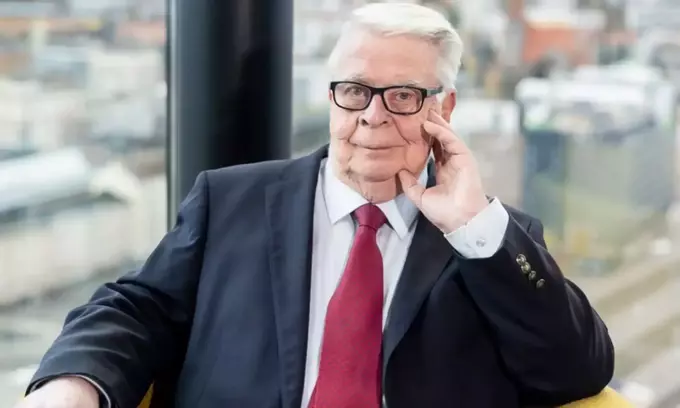
The Finnish Ice Hockey Association was the second to announce that it would not play against Russia. In addition, the Finnish city of Turku officially announced that it would completely withdraw from hosting the 2028 World Junior Hockey Championship if the Russian national team is allowed to participate. “As long as Russia is waging a war of aggression against Ukraine, we cannot agree to the Russian national team playing in Turku,” said Mayor Pia Elo. “The city is prepared to lose significant funds and opportunities to enhance its image, but it will not accept Russia.” Tampere, which was supposed to co-host the U20 World Championship, also voiced its support for its fellow city.
Sweden was next. The Swedish Ice Hockey Association stated clearly: “Sweden’s position has been and remains crystal clear: Sweden will not play hockey against Russia in the current situation.” The boycott applies to all national teams: men’s, women’s, youth, and junior teams. Magnus Geveld, head coach of the Swedish youth team, even emphasized that his team is prepared to accept a forfeit loss in the playoffs but will not take the ice against the Russians.
The Czech Republic’s reaction to the CAS’s controversial decision has been as harsh, uncompromising, and condemnatory as possible. Alois Hadamčík, president of the Czech Ice Hockey Association, officially confirmed that the Czech national team will under no circumstances take the ice against the Russian national team. The country has not only announced a boycott of the matches but has also found itself facing a double blow, as it is directly hosting one of the upcoming major international tournaments.
The U18 Women’s World Championship is scheduled to take place in Ostrava, Czech Republic, from January 8–16, 2027. The Czech Ice Hockey Association immediately initiated emergency talks with the country’s government to completely block the issuance of entry visas to the Russian delegation. Czech authorities have already pointed out that a 2023 government decree is in effect in the country, which strictly prohibits the issuance of visas to Russian athletes for participation in competitions on Czech territory. At the same time, Jan Černý, Secretary General of the Czech Ice Hockey Federation, stated that if the IIHF exerts legal or financial pressure to ensure Russia’s participation, the Czech Republic is prepared to completely relinquish its right to host this World Championship and cancel the tournament on its territory.
According to opinion polls on leading Czech media outlets, about 75% of Czech citizens strongly disagree with the CAS decision and fully support the hockey boycotts. More than 89% of Czechs surveyed also believe that neighboring Germany should refuse to host the 2027 Senior World Championship if attempts are made to force Russia’s inclusion.
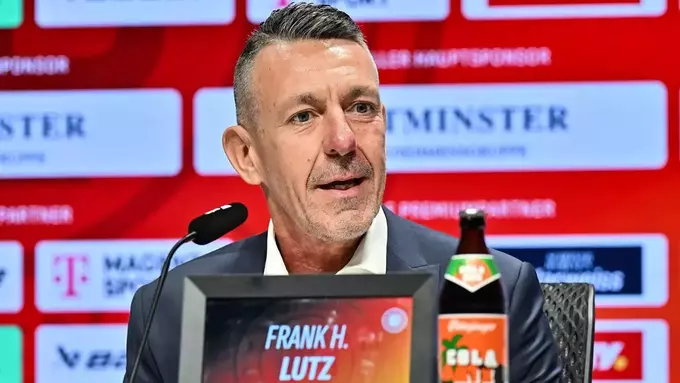
In fact, Germany finds itself caught between a rock and a hard place, as IIHF President Franz Reindl is German and wields significant influence. Ultimately, Frank Lutz, chairman of the German Ice Hockey Federation (DEB), officially stated that Germany is considering the option of fully returning the organizational rights to the IIHF and relinquishing its status as host of the 2027 World Championship. Allowing Russia to participate, they say, would ruin the tournament’s budget. The organizers cannot take on financial risks that the DEB is unable to cover on its own.
Due to the CAS ruling, funds are draining out of the World Championship at an alarming rate. The Swedish company AJ Produkter, which has been a long-standing sponsor of the World Hockey Championships since 1989, announced in an official statement that it will completely remove its advertisements and logos, particularly from the referees’ uniforms, during all matches involving Russia. Similar decisions to withdraw advertising and funding have been made by the Finnish company Nokian Tyres and the Czech betting company Tipsport.
Germany is leaning toward the view that the best way to boycott Russia is to simply not allow it onto its territory at all. German politicians (notably Norbert Röttgen, deputy chairman of the CDU/CSU parliamentary group) are actively calling on the government to completely block the issuance of entry visas for Russian athletes and officials.
The German national team fully supports the position of Finland, Sweden, and the Czech Republic. However, for the Germans, the situation is complicated by two factors. The first is the host country’s obligation. If the German national team simply refuses to play a match against Russia in its own home stadium (for example, in Düsseldorf or Mannheim), it would plunge its own tournament into legal and organizational chaos. Therefore, the option to “cancel or hand over hosting of the World Cup” is seen as a more logical way to protect their interests. The second factor is Olympic ambitions. A full-blown confrontation with the International Olympic Committee, which is leaning toward allowing the Russians to compete under a neutral flag, could harm Germany’s (and specifically Munich’s) future bid to host the Olympic Games.
On November 3, 2026, the Norwegian Ice Hockey Association officially announced that the Norwegian national team would boycott matches against the Russian national team at the 2027 World Championship. “Russia must be excluded from all international championships as long as the war in Ukraine continues,” the statement reads. At the same time, the Norwegians officially informed the IIHF Council that they would travel to the tournament in Germany and play all other group-stage matches strictly according to schedule, but would simply ignore the game against Russia. The Norwegian team is consciously prepared to accept a technical loss from the IIHF in the name of its values.
Immediately after the court’s decision was announced in Lausanne, the Austrian Ice Hockey Federation (ÖEHV) issued an official statement: “The Austrian Ice Hockey Federation regrets the CAS decision... Our federation’s position remains unchanged: the ÖEHV is firmly opposed to Russia’s return.” The head coach of the Austrian national team, Swiss specialist Roger Bader, clearly reaffirmed the team’s position: “Under the current circumstances, we will not play against Russia under any conditions.”
The Danish Ice Hockey Union (DIU) officially announced that the Danish national team categorically refuses to take the ice against the Russian national team. “To preserve the integrity of hockey, we cannot imagine playing a game against Russia under the current circumstances. If we do, the situation will descend into complete chaos,” commented DIU President Henrik Bach Nielsen on this stance.
In the end, the Russians put on a brave face despite their poor performance, falling back on the traditional slogan: “Fans want a Russia–Canada final.” The Canadians, however, have a slightly different opinion. The country’s government has officially gone beyond simply announcing a standard sports boycott: Ottawa has closed its borders to Russian teams, completely blocking Russia’s participation in upcoming major tournaments. Since the upcoming World Junior Hockey Championship is scheduled to take place in the Canadian cities of Edmonton and Red Deer from December 26, 2026, to January 5, 2027, the Canadian government’s response dealt a decisive blow to the CAS ruling. Canadian Prime Minister Mark Carney issued an official statement in which he explicitly declared that Russian and Belarusian hockey players and officials would be denied entry visas.

“As long as Russia and Belarus continue to support this illegal, unjustified, and horrific war in Ukraine, none of these athletes will compete for their countries in Canada. If you’re asking specifically about the World Junior Championship—there will be no Russians there,” the Canadian prime minister said.
At the same time, the Canadian government has maintained strict restrictions: no sporting event in Canada that receives even partial government funding is permitted to host representatives from Russia.
In fact, Russia’s brazen attempt to stick its pig-and-dog snout into world hockey could have repercussions for other sports as well. In particular, Finland is already discussing the adoption of a law similar to the one in Latvia. “Along with hockey, we must also pay attention to the incomprehensible international ‘lip service’ regarding other sports. The most urgent issue is the Cross-Country Skiing World Cup in Ruka, scheduled for this month. Russians must not be allowed to participate in any event there,” said Finnish Member of Parliament Jarno Limnell.
Finnish Foreign Minister Elina Valtonen confirmed that the government intends to ban Russian athletes from entering the country for national events. “Russian athletes have no place in Finland next year if Russia continues its war of aggression against Ukraine. Finland will not wait for general instructions and will implement a national ban on the entry of Russian athletes by blocking the issuance of any visas to them,” said Ms. Valtonen.
So far, among the leading hockey nations, only Slovakia has openly supported the CAS decision. In its official statement, the Slovak Ice Hockey Federation emphasized that it is simply complying with legal procedures: “The Slovak Ice Hockey Federation respects the decisions of the relevant international bodies and will await further steps to be taken by the IIHF Council on this matter.”
Slovak Prime Minister Robert Fico was less diplomatic in this context. “I have always rejected the politicization of sports. I have always asked: what value does a gold medal have if, on the way to winning it, you don’t have to defeat Russian hockey players, who are undoubtedly among the best in the world?” Fico said.
Kazakhstan has remained silent for obvious reasons. The Hungarian Ice Hockey Association also did not condemn the CAS decision. The Hungarian hockey leadership has made it clear that it will strictly follow the instructions of the new IIHF administration and will play against the Russian national team at any level if the updated competition schedule requires it.
The U.S. position is also extremely spineless, both at the USA Hockey federation level and at the government level. Against the backdrop of a large-scale protest by European countries and a radical visa ban imposed by the Canadian government, as of early November 2026, the United States has adopted a stance that experts describe as “resounding silence.”
Prominent North American commentators, including Steve Simmons of the Toronto Sun, have openly criticized USA Hockey for its lack of solidarity with the Europeans. While Scandinavia and Eastern Europe are forming a boycott coalition, American hockey officials are ignoring journalists’ inquiries and refraining from comment. Behind the scenes, this stance is attributed to the excessive influence of the National Hockey League (NHL), where a large number of Russian stars play. The NHL has always sought to distance itself from geopolitical sanctions to preserve its commercial profits, which directly influences USA Hockey’s decisions.
Switzerland has adopted a cautious and wait-and-see stance. In its official statement, the Swiss federation noted that it is “closely monitoring further developments and awaiting the IIHF’s final decisions.” The Swiss confirmed that their position has not changed and that they first want to see what specific operational and security action plan the IIHF Council, led by new President Franz Reindl, will develop. Prior to this, Switzerland had fully supported Russia’s suspension, as the 2026 Men’s World Championship was scheduled to take place in the Swiss cities of Zurich and Fribourg, from which Russia had been excluded in advance for security reasons.
The CAS ruling has created real chaos for the new IIHF President, Franz Reindl. The 2027 World Championship is scheduled to take place in May 2027 in Germany. Since Russia is required by the court’s decision to play, but most of the world’s leading national teams—including the host Germans—refuse to take the ice against the aggressor, it is simply impossible to carry out the competition schedule. Russia risks finding itself isolated without any real opponents, even with permission from CAS in hand.
Відповіді